Before opening a recording application, decide what listeners need to judge. If you want help with the lyric and melody, a clear voice with one accompanying instrument may be enough. If the question concerns a bass movement or a rhythmic arrangement, include those parts. Adding layers without a purpose can make a draft harder to discuss and give listeners permission to focus on the wrong problem.
Start with the room you already have
Listen to the space before recording in it. Switch off avoidable noise sources when safe, close a window if traffic is intrusive and move away from a rattling desk. Soft furnishings can reduce some reflections, though they do not turn an ordinary room into a soundproof booth. Heavy treatment is not a prerequisite for a useful songwriting sketch.
Make a short test in two positions. A small move away from a wall or corner may change the recording more than an effect added later. With a phone, avoid covering the microphone and keep the device stable. With an external microphone, check that stands and cables are secure before performing. Never compromise electrical safety to eliminate noise.
Set a level that leaves room
Record a loud section as a test, not only the gentle introduction. Adjust the input so the loudest moments stay below digital clipping. A peak around −12 dBFS can be a practical starting point for a simple demo, not a mandatory target. The important point is to preserve clean headroom rather than chase the loudest possible waveform.
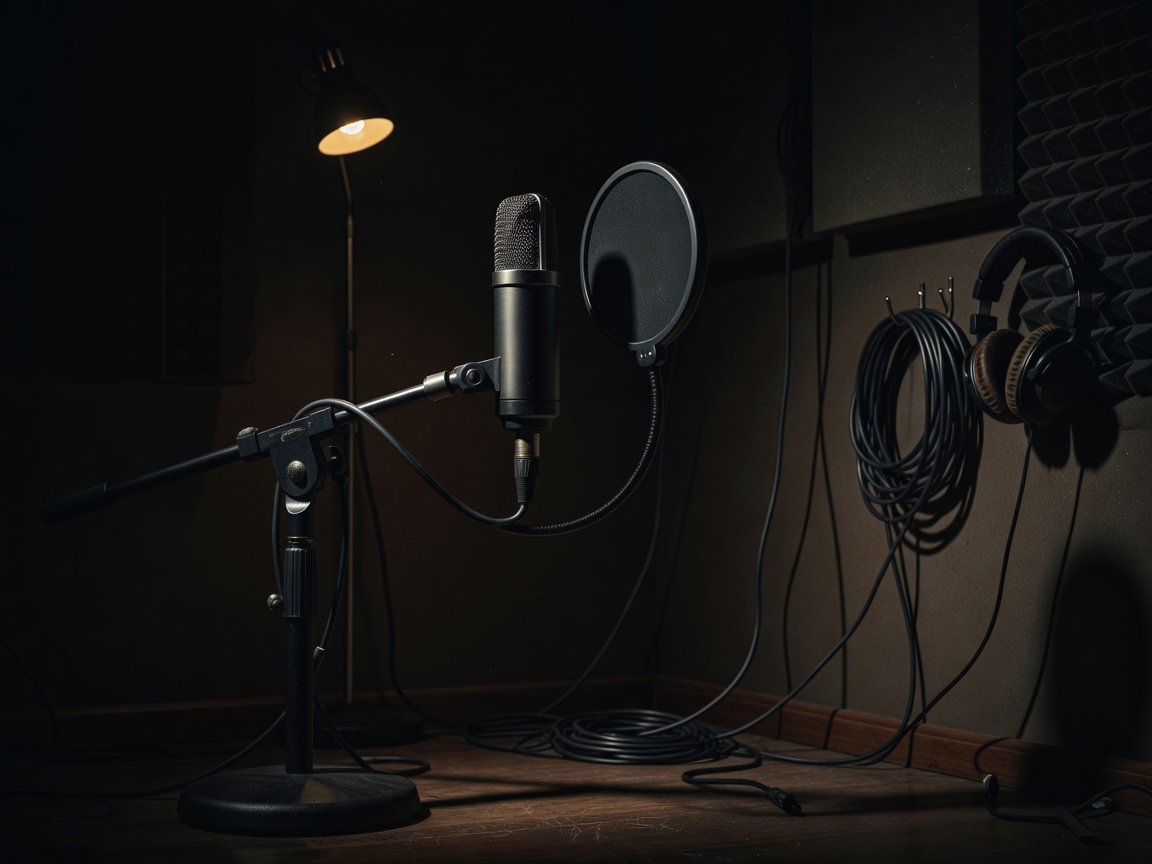
Keep microphone distance reasonably consistent. A pop filter can help with bursts of air, but placement still matters. Try a slightly off-axis position if plosive sounds dominate. Move in small increments and compare short takes. A closer microphone may reduce the relative room sound while also changing bass response, so listen rather than assuming closer always means clearer.
Use a simple, familiar workflow
Audacity, GarageBand, REAPER and Ardour are real recording tools with different workflows and licensing arrangements. You do not need to switch applications to follow this guide. Choose something that lets you capture, play back and export reliably. Save the project before experimenting and keep an untouched copy of a take you may want to revisit.
A click track is useful when timing consistency serves the song, but it is not compulsory for every draft. If you use one, prevent it from leaking loudly into the microphone. Headphones can help isolate playback; keep the level comfortable and take breaks. Persistent ringing or discomfort is a reason to stop, not to push through another take.
Make the words easy to follow
Bring the accompaniment down before automatically turning the vocal up. A busy instrument can mask consonants even when the vocal meter looks healthy. Check a quiet playback level: can you follow the line without straining? Listen on ordinary speakers as well as headphones if available. You are testing clarity, not trying to make every device sound identical.
Use reverb and compression cautiously when the purpose is writing feedback. A long reverb tail may hide phrase endings, while aggressive level control may exaggerate room noise. Keep a relatively dry version so listeners can distinguish the composition from the production. Correct obvious distractions if you want, but do not spend a week polishing a bridge whose melody is still undecided.
Export with context and permission
WAV preserves uncompressed audio; MP3 can make casual sharing more convenient. Export a format the listener can open, then listen to the exported file itself. Check for a missing vocal, an accidental mute, unwanted silence or a cut-off ending. Give the file a descriptive name such as working-title-verse-revision-02.mp3 rather than relying on “final” repeated several times.
Include the working title, version, the question you want answered and any relevant lyric text you have permission to share. Confirm consent from collaborators before distributing their performances or unpublished writing. Samples and backing tracks may have separate licence conditions. A private feedback group is not automatically an exception to those conditions.
A useful draft note: “This is a voice-and-guitar writing sketch. I would like feedback on whether the second verse leads naturally into the chorus. Please leave mix suggestions aside for now, and do not repost the audio.”
Do not apologise for every imperfect breath or chair noise. Tell listeners which limitations matter to the question. A thoughtful rough take can reveal a song’s structure, intention and emotional direction. That is enough to begin a useful conversation—and enough to decide what the next recording actually needs.